Along with East Cambridgeshire and South Cambridgeshire district councils, we have backed the creation of two new unitary councils for Cambridgeshire:
- one for Greater Cambridge (Cambridge and South Cambridgeshire)
- one for North Cambridgeshire and Peterborough (East Cambridgeshire, Fenland, Huntingdonshire, and Peterborough)
This proposal for reorganising Cambridgeshire's seven councils (into two new councils) is known as Option B.
To help residents find out more about the benefits of option B we hosted a webinar on 6 March with the leaders and representatives from all three councils. We also produced a joint presentation about option B, and you can read the detailed proposal for option B [PDF, 24MB] which was submitted to government.
The leaders of Cambridge, East Cambridgeshire and South Cambridgeshire councils explain why their councils think Option B is the best for the whole region.
A new unitary council for Cambridge and South Cambridgeshire
Along with East Cambridgeshire and South Cambridgeshire councils, we have backed the creation of a new unitary council for Greater Cambridge (Cambridge and South Cambridgeshire) and another for North Cambridgeshire and Peterborough.
The three council leaders say this option offers financial security and will deliver up to £43 million savings a year and respect local identities.
- North Cambridgeshire and Peterborough – serving around 612,000 people in East Cambridgeshire, Fenland, Huntingdonshire and Peterborough.
- Greater Cambridge – serving around 322,000 people in Cambridge and South Cambridgeshire.
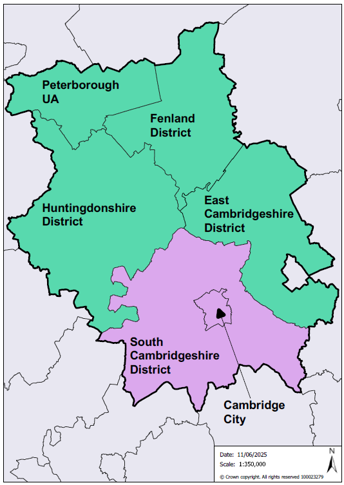
The detailed proposal making the case for these two new unitaries [PDF, 24MB] was produced through close working between Cambridge City Council, East Cambridgeshire District Council and South Cambridgeshire District Council, as well as other councils in Cambridgeshire.
Why Cambridge, East Cambridgeshire and South Cambridgeshire councils believe option B is best
A summary of the benefits are:
- Both new councils would be financially secure, with anticipated savings of £43 million a year. Savings would be reinvested to improve front line services across the region, as residents have called for. This level of ambition from the three councils is much greater than any of the other proposals for Cambridgeshire, which are very modest compared to all local government reorganisation proposals submitted to government from across the country.
- The two councils would represent two areas that have different strengths, but are economic equals, limiting any north-south imbalance. Greater Cambridge with its world-leading science and tech economy, with North Cambridgeshire and Peterborough as an agricultural and industrial powerhouse
- Greater Cambridge being smaller in size would enable closer collaboration with key local institutions, such as Cambridge University Hospitals and University of Cambridge – to help drive innovative solutions to local challenges, especially in the health and technology sectors
- North Cambridgeshire and Peterborough being larger in size means more council tax and government funding, and better ability to commission services, to help tackle pockets of deprivation and help shape local care markets. Both councils would have lower social needs than the England average, and of any of the other proposals
- Aligning council boundaries to existing partnership working: Cambridge and South Cambridgeshire are already working together on a joint Local Plan for Greater Cambridge for well-managed growth in the years ahead, the councils have shared services including waste and planning, and both councils have a combined 13,000 council homes between them – whereas the northern councils do not have council housing stock
- Recognising rural communities in the northern unitary: The rural nature of the northern unitary would drive it to work closely with local communities to deliver what’s needed, through Resident Engagement Pathways – what’s right for one area may not be relevant in another, allowing council resources to be targeted more effectively
This detailed proposal is supported by several appendices:
- Appendix 1: Glossary [PDF, 0.3MB]
- Appendix 2: Financial analysis and modelling [PDF, 0.6MB]
- Appendix 3: Detailed options appraisal [PDF, 0.5MB]
- Appendix 4: Cambridgeshire and Peterborough countywide survey results [PDF, 9.5MB]
- Appendix 5: East Cambridgeshire survey results [PDF, 0.6MB]
- Appendix 6: The future of Cambridge and South Cambridgeshire survey results [PDF, 0.4MB]
- Appendix 7: Inner Circle Consulting: Case for Cities report [PDF, 11.5MB]
- Appendix 8: Pixel - Financial modelling and reporting [PDF, 2MB]
- Appendix 9: Newton - People Services report [PDF, 13.5MB]
- Appendix 10: Red Quadrant - Future of social care and public health report [PDF, 1.5MB]
- Appendix 11: PPL - Advice note on housing and homelessness [PDF, 0.4MB]
- Appendix 12: Cambridgeshire and Peterborough People Services overview [PDF, 1.5MB]
- Appendix 13: Cambridgeshire and Peterborough Local Government Reorganisation comparative implications for people services to 2040 [PDF, 4.5MB]
- Appendix 14: Transport to work areas - further analysis [PDF, 5.5MB]
- Appendix 15: Implementation risk log [PDF, 0.3MB]
- Appendix 16: Equalities Impact Assessment [PDF, 0.6MB]
Support for option B at Cambridge City Council
At Cambridge City Council’s Full Council meeting on Thursday 24 July, councillors passed a motion outlining how a unitary authority based on the current boundaries of Cambridge City Council and South Cambridgeshire District Council, alongside viable arrangements for the rest of Cambridgeshire and Peterborough, was likely to be the best option for the residents of Cambridge.