We manage weeds on land we own, including our parks and around our car parks, and remove them from roads and pavements as part of our street-cleaning service.
We have stopped using herbicides in our routine weed-management work. We now use mechanical and manual methods to control weeds.
This herbicide-free approach:
- protects biodiversity and pollinators
- improves soil and water quality
- reduces exposure to chemicals for residents and staff
We might use herbicides in limited circumstances where other methods are not suitable. For example, we might use them to control certain invasive plants such as Japanese knotweed or giant hogweed.
Removing weeds on roads and pavements
We use mechanical sweepers and manual tools to remove vegetation from kerbs, gutters and paving joints.
We do this and address areas with heavier weed growth through our deep-cleaning programme, which operates on a ward-based schedule. Read about street care and cleaning to find out more.
A government blog post about how councils are finding greener ways to manage weeds in our parks and streets explains how our forward-thinking weed-management approach is influencing other councils.
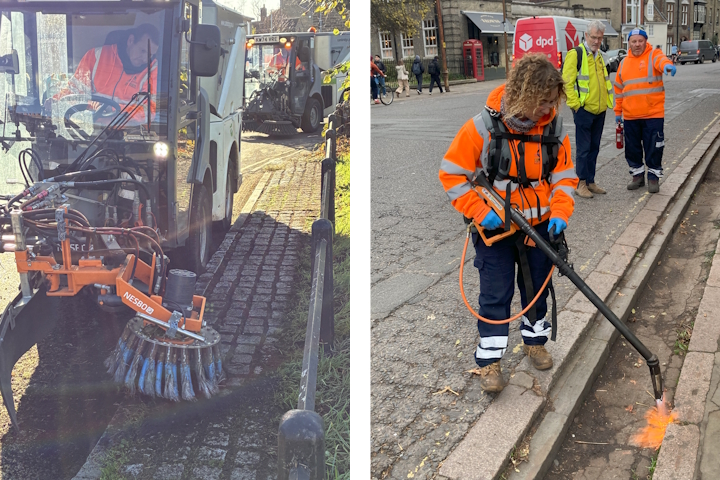
The equipment we use to remove weeds, dirt and debris instead of using herbicides includes:
- a weed-ripper brush attachment on one of our mechanical sweepers, which is ideal for cleaning roads, traffic islands, and pavements. The brush removes vegetation and accumulated detritus and helps reduce regrowth. It is designed for safe and efficient operation in busy traffic environments
- a weed-brush attachment for our compact tractor, suited for larger and open areas. This attachment dislodges weeds from surfaces for easy collection and disposal
- two walk-behind units with weed brush and sweeper attachments, which provide manual but effective weed removal. They are primarily suitable for footpaths and pedestrian precinct areas where larger sweepers cannot access
- thermal-lance systems, for non-chemical weed control using intense heat, ideal for areas where other solutions are impractical
- a large channel-sweeper vehicle designed for roadside gutter channels and road edges. It has a standard sweeping attachment and wander hose, which allows it to suck up accumulated detritus
- strimmers and brush cutters fitted with specialist weed-removal heads and moss-removal brushes, which we use in backlines and underneath street furniture
Report invasive weeds on public land
Tell us if you see any of the following invasive plant species spreading on public land:
We cannot treat weeds on private land.

Our form to report weeds is not working at the moment. Please contact us to tell us where you have seen the weeds and we’ll report it for you.
We aim to inspect invasive plants within 10 days of receiving your report and take appropriate action.
Community weeding scheme
Our ‘Happy Bee’ scheme helps you improve biodiversity in your street through community weeding.
We support groups of residents with tools and advice to manage their pavements in ways that better support wildlife and public health.
The scheme was set up as part of our Herbicide Reduction Plan. It has proven to be a success and its development and expansion is ongoing.
Read the Happy Bee scheme webpage to find out more and express interest in joining.
We made this change at the conclusion of our Herbicide Reduction Plan [PDF]. It was also a response to our declaration of a biodiversity emergency.