Work has started this week at Cherry Hinton Brook, to create the fifth of five chalk stream case study sites across Cambridge, which will together play an integral part in the wider Greater Cambridge Chalk Stream Project.
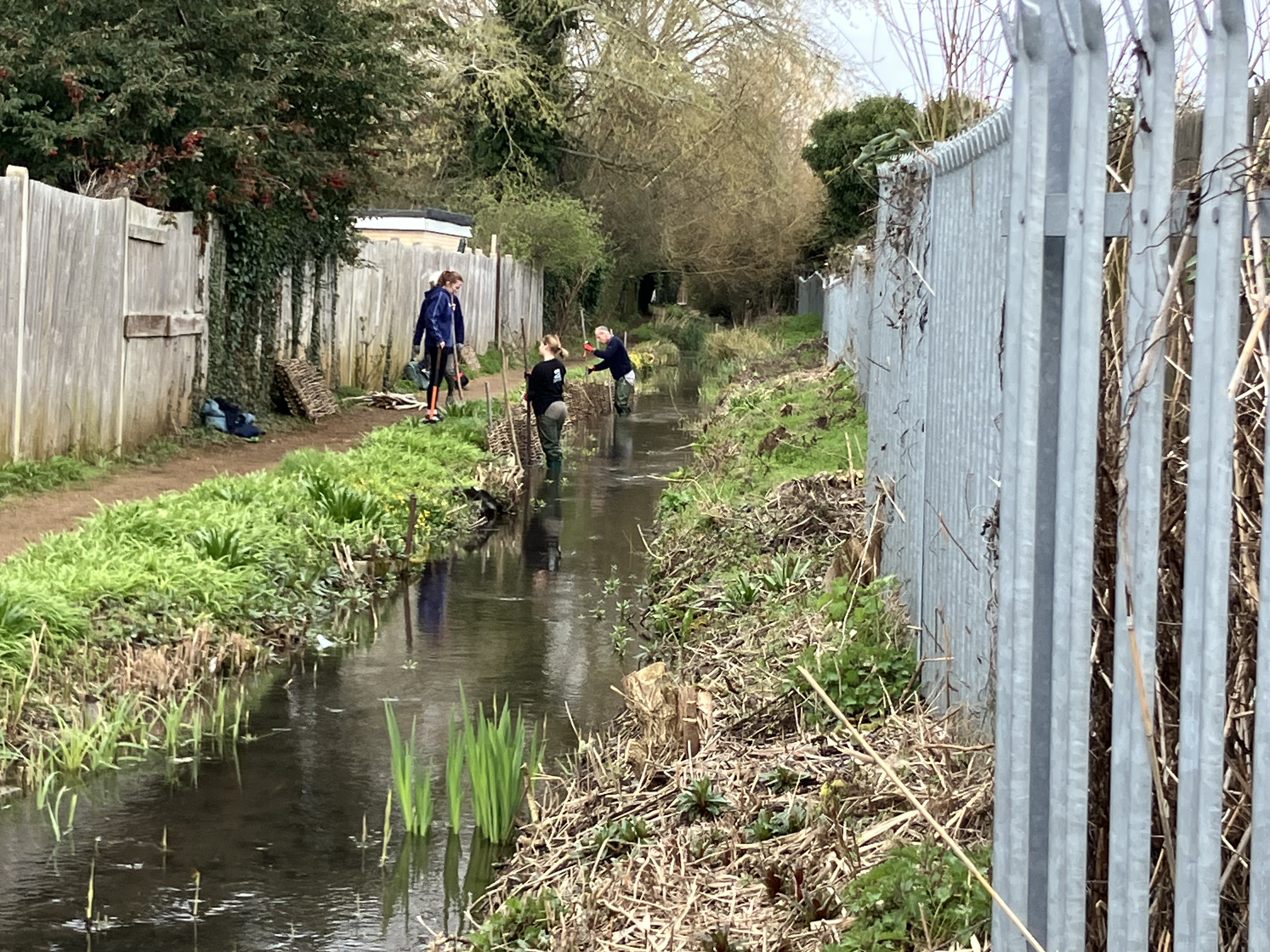
Since February, Cambridge City Council has been overseeing work to prepare the case study sites along stretches of watercourses in the city – the others are at Coldham’s Brook, Hobson’s Brook, Giant’s Grave and Nine Wells – which will provide vital evidence to help the Chalk Stream Project’s goal to protect, restore and enhance the network of internationally important chalk streams found in Cambridge and beyond.
The work at the five case study sites has included:
- Targeted tree and scrub management – Selective coppicing and thinning of trees and scrub alongside the streams to create a better balance of light and shade. Root systems have remained in place, helping to stabilise banks while allowing bankside plants to establish stronger roots and improving habitat structure. Increased light supports aquatic plants where excessive shade has previously limited growth.
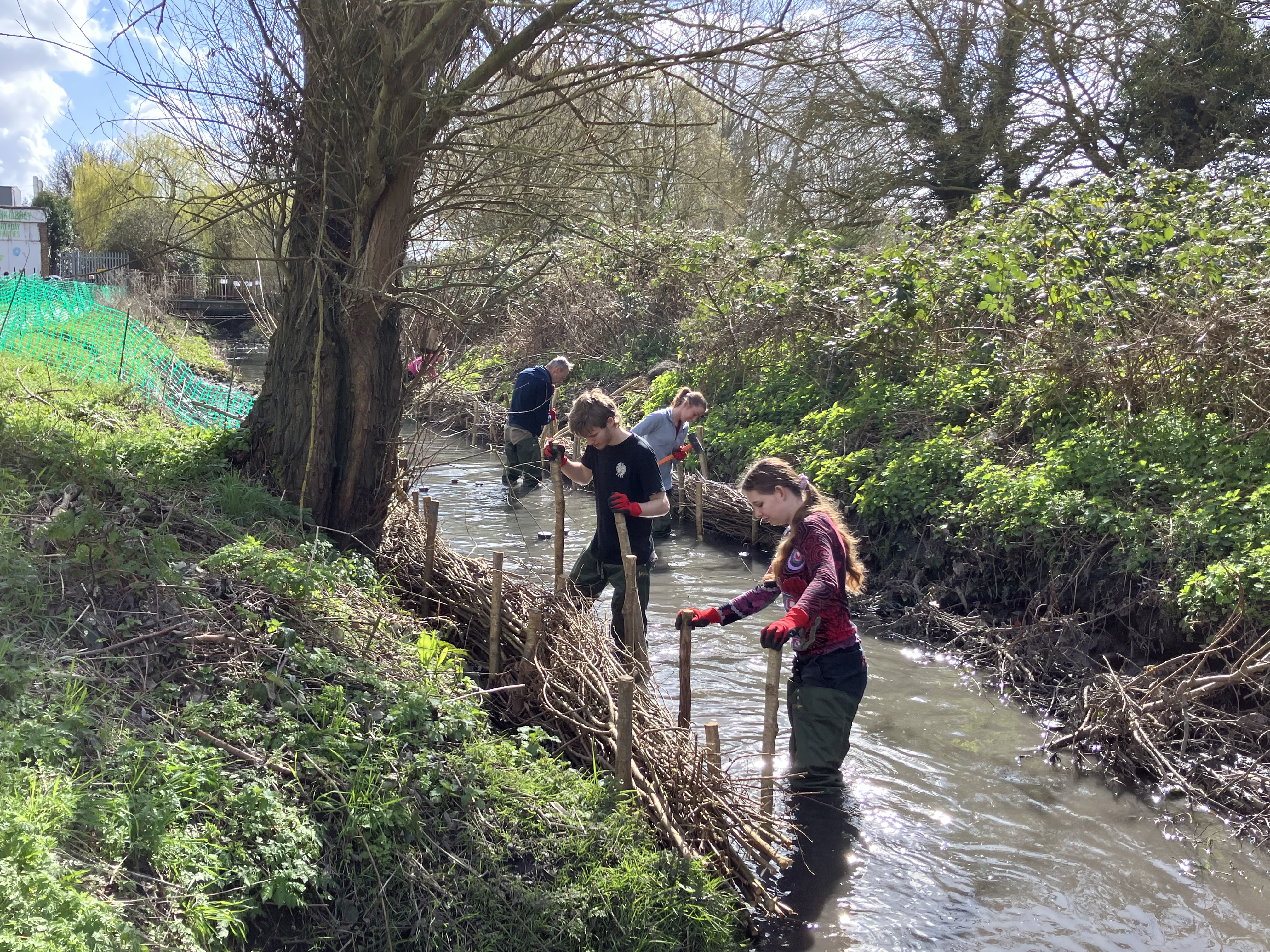
- In-channel and bankside habitat restoration – Carefully designed, nature-based features are helping to stabilise banks, trap fine sediment, improve flows and oxygen levels, protect and clean gravels, and create a more natural stream shape featuring shallow margins and deeper areas.
- Use of natural materials and proven techniques – Restoration work is employing biodegradable, nature-based methods including coir rolls and matting, brash bundles and other woody material, small appropriate gravels and minor alterations to channels to increase natural variation in water flow.
The five city sites form part of the Greater Cambridge Chalk Stream Project’s network of case studies in Cambridge and beyond, which are being monitored before, during and after restoration. The evidence acquired from these sites will guide future restoration of chalk streams across the city and surrounding catchments.
The Greater Cambridge Chalk Stream Project is being jointly funded by Cambridgeshire and Peterborough Combined Authority, Anglian Water and Cambridge Water, as well as Cambridge City Council. Local communities, groups and volunteers have been playing an active and vital role in developing and guiding the project, including through citizen science monitoring and regular hands-on restoration activities.
Chalk streams have been described as ‘England’s Great Barrier Reef’ of freshwater ecosystems and are among the rarest and most fragile habitats on Earth. Around 85% of chalk streams are located in England, making their protection a global responsibility. In Cambridge, these streams are a defining natural feature of the city, supporting wildlife and contributing to the wellbeing of local communities.
For Cambridge City Council, protecting these ecosystems means safeguarding a precious natural heritage for future generations. Chalk streams are fed by groundwater from the chalk aquifer, giving them their characteristic clear, mineral-rich waters that support a wide diversity of plants and animals.
The evidence-led approach of the Greater Cambridge Chalk Stream Project
One of the key challenges in Cambridge is the combination of historic agricultural pressures and the effects of modern urban life.
Nitrate levels in the chalk aquifer remain high due to the long-term effect of agriculture across the region. However, within the city itself, the main pressures on our chalk streams are urban. Roads, drainage networks and hard surfaces rapidly transfer pollutants into streams.
Monitoring has shown that urban tributaries and drains can carry elevated levels of nutrients, fine sediments and contaminants associated with the runoff from roads, including salts, metals and organic matter. This input is often linked to rainfall events, and can cause short-term spikes in pollution that are not always visible without frequent monitoring of watercourses.
Sediments from roads are a particularly important issue in Cambridge. Analysis of road sweepings has shown high levels of fine material and elevated phosphate and ammonia concentrations, which can directly affect chalk streams.
These pressures contribute to one of the greatest threats to chalk streams – nutrient enrichment. Elevated nutrients can trigger excessive growth of algae, reducing light and oxygen levels and degrading habitat quality. Fine sediments transported from urban surfaces can also settle within gravels, impacting species such as brown trout that rely on clean, well-oxygenated areas for spawning.
To protect our rare chalk stream ecosystems, it is essential to understand both the baseline conditions and the urban pollution acting on top of them. Increasing this understanding is a core focus of the case study sites, which are generating high-resolution data to identify when, where and how these pressures occur.
The newly created case study sites will provide critical evidence to support targeted, effective restoration and pollution mitigation across Cambridge’s chalk streams. Without this evidence-led approach, there is a risk that underlying causes of degradation are not addressed. With it, there is a real opportunity to restore ecological function and secure the future of these globally important habitats.
Find out more about the Greater Cambridge Chalk Stream Project, including how you can get involved.