Homes England Social and Affordable Housing Programme


Contents

Through Cambridge Investment Partnership (CIP), our housebuilding partnership with The Hill Group, we have been one of the top ten council house builders per capita for two of the last three years.  

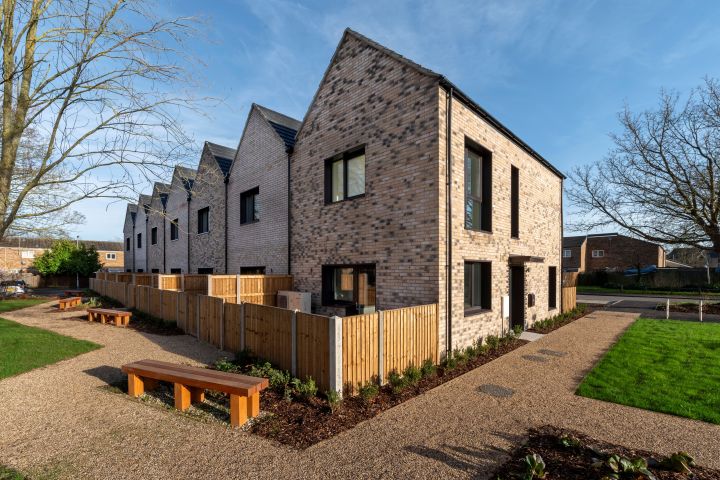
Aragon and Sackville Close by CIP

We usually build on council-owned land, such as on the council’s former depot, or on ageing council estates where existing homes often don’t meet the modern standards our tenants deserve. 

We’ve built 700 net new council homes since 2018. Including our planned developments on Histon Road, Newbury Farm, Eddeva Park and East Barnwell (which already has Homes England funding), the council will have delivered or is in the process of delivering 1,007 council homes to date.  

We have previously set a target to build a further 1,000 council homes by 2030.  

In February 2026 the council will be submitting a bid to Homes England to apply to become a Social and Affordable Housing Programme (SAHP) strategic partner. 

If successful, a strategic partnership would secure long-term, flexible funding of up to £96 million from Homes England to support us to achieve our target of 1,000 council homes by 2030, and exceed this to build 1,300 council homes by 2036.  

The funding through a strategic partnership would also enable us to offer more of the new council homes on the lowest level of council rent – ‘social rent’, which is discounted to around 40-45% of market rents. 

In the past, to help fund our housebuilding programme, we have applied for government funding on a scheme-by-scheme basis – such as at East Barnwell, where we were awarded £7 million towards building 120 new council homes, replacing 18 ageing council flats on the site.  

If the council is not successful in obtaining a strategic partnership, it will still be able to bid for grant funding from Homes England on a scheme-by-scheme basis. 

Building market sale homes 

Building new homes is costly, and the council has limited funds.  

On some of our schemes we build homes for sale as well as council homes. The profit from the sale of these market homes subsidises the cost of the council homes on the development. Building homes for sale is also an important factor in trying to address the housing crisis locally, as young people struggle to buy homes near to where they have grown up or where they work.  

The number of council homes and market sale homes we build on each scheme varies, depending on what is affordable to the council. We need to ensure our investment in new council homes doesn’t unduly impact the council’s long-term finances or put delivery of services at risk. 

Hidden regeneration costs 

The mix of council and market sale homes on each scheme can be substantially affected by the costs associated with compensating people who currently live in existing homes where regeneration is planned 

Everyone who needs to move will be provided with support. This includes £1,250 to help cover moving costs, with council tenants also receiving home-loss payments of £8,100, and homeowners also being paid the market value of their home plus 10%.  

In some parts of the city, significantly higher house prices can make the costs far higher than in other parts of the city. This affects the financial viability of redeveloping some of our existing homes.  

What a strategic partnership would mean for Cambridge City Council 

With a strategic partnership securing long-term, flexible funding, we anticipate being able to achieve our existing target of building 1,000 more council homes by 2030, and exceed it to build a new total of 1,300 council homes by 2036. 

What’s more, with a strategic partnership, we would be able to offer close to 60% - that’s 846 homes - of the new council homes on the lowest level of council rent (social rent, around 40-45% of market rents). 

This approach should mean that, instead of applying for funding on a scheme-by-scheme basis as we have done in the past, we would have more certainty about external funding for our overall housebuilding programme, and at much earlier stage in the development process.  

To become a strategic partner, we are required by Homes England to build 800 net new council homes by 2036, and to demonstrate that we have identified where 50% of these would be built. We currently have a pipeline of 582 council homes identified, which is well over this 50% requirement. 

Funding calculations 

Cambridge City Council’s own housebuilding policy commitment is to ensure that at least 50% of the new homes we build across our housebuilding portfolio are council homes.  

This is in addition to planning policy, which requires that 40% of homes on a mixed tenure site are ‘affordable homes’ (or council homes in our case).  

Homes England already provides funding for any ‘affordable homes’ (or council homes) being built on mixed tenure sites above the 40% required by planning policy. In some cases, the council’s planning committee may agree that a percentage lower than 40% is acceptable, due to viability constraints.

In this case, Homes England already provides funding for any council homes being built above what has been agreed as the percentage of affordable homes that is planning policy compliant.  

On our regeneration sites, the cost of buying back people’s homes and paying compensation to council tenants impacts the viability of the development in planning terms. An independent viability assessment might say that it’s only financially viable for the development to build a lower number of council homes, say 10% 

In this case, Homes England would provide funding for any council homes built above what is policy compliant, above the 10%.  

Case study – Hanover and Princess Court viability assessment

We are already planning to redevelop two existing residential blocks at Hanover and Princess Court, just off Hills Road in Cambridge. The two blocks contain 127 homes (82 council and 45 privately owned), and we plan to replace these ageing homes with 165 new homes (72 council and 93 private sale).  

Because of the scheme’s location in central Cambridge, the costs of buying back homes and compensating tenants are high (around £18 million), which means the council is limited in the number of council homes it can afford to build on this site. This also impacts how many of the new council homes can be offered at the lowest level of council rent – because the rents in the new homes help to repay the council’s housebuilding costs. 

An independent viability assessment of this site might indicate that it is only viable for 5% of the 165 new homes to be council homes, for example. This would be considered appropriate in planning terms despite being under the usual 40% planning policy requirement because of the site’s demolition and compensation costs.  

Despite this, we would remain committed to ensuring that 44% (72) of the new homes will be council homes if funded by Homes England in the usual way. By confirming to Homes England that the financial viability (taking rehoming costs into account) was only 5%, Homes England could provide us with funding for all of the new council homes built above the 5%. The funding for the additional 39% of homes which would be council homes could equate to around £8 million.  

If Homes England provides funding through the strategic partnership, 60% of any funded homes would be offered at the lowest level of council rent (or ‘social rent’, at 40-45% of market rent), with the remaining 40% of any funded council homes likely to be offered at 80% of market rent. 

Without any Homes England funding for council homes on this site, the council would need to consider its options for redeveloping the site. We may have to accept that it is unaffordable to build many council homes on the development, and find another site in the city centre for council homes to ensure compliance with our own commitment to build 50% of council homes across our housebuilding portfolio.  

Case study – Ekin Road viability assessment

We are already planning to redevelop the former council estate on Ekin Road in Abbey. The estate currently has 91 council homes and 17 private homes, and we plan to build 78 council and 56 private sale homes.  

This would mean 56% (78) of the new homes were council homes, above the 40% required by planning policy. We would anticipate Homes England providing the funding to cover the cost of building the 16% of homes above the 40% threshold. Funding for the 6% could be up to £2.6 million, which the council would otherwise have had to fund directly. 

If a viability assessment indicates that it is viable to build fewer than 40% council homes on this site, say only 10%, we would be eligible for more funding from Homes England. This would cover the cost of building all the council homes above what’s considered viable at 10%. Funding for this additional 46% could be up to £7.4 million.  

If Homes England provides the funding through the strategic partnership, 60% of the funded council homes would be offered at the lowest level of council rent (or ‘social rent’, at 40-45% of market rent), with the remaining 40% of the council homes likely to be offered at 80% of market rent. 

If the council needed to fund this directly, we would need to carefully consider what level of council rent to offer the 78 new council homes at, as the rental income contributes toward funding our housebuilding programme.  

Moribund status 

Existing buildings that are coming to the end of their life, where the council cannot retain the homes for the long term, can be classed as moribund.  

For the purposes of Homes England’s requirement for strategic partners – that they build a minimum of 800 net new council homes by 2036 – this would mean that all of the new council homes replacing those classed as ‘moribund’ would be considered net gain, and count towards the minimum of 800 new council homes required. 

Build to Rent 

Another option that can impact the amount of funding Homes England provides is build to rent. Where a development is proposing build to rent homes, the planning policy requirement for the number of these homes that need to be affordable is 20% — much lower than the 40% normally required.  

If the council were to consider delivering build to rent schemes in the future, this could mean that funding would be available from Homes England for any of the new affordable homes built above the 20% policy requirement within a build to rent development.  

The council is planning to build more than 40% council homes on all development sites, and more than 50% across its housebuilding portfolio. But, setting out the minimum requirement in this way can help to secure more Homes England funding for the difference between what is policy compliant and the additional council homes we want to build, enabling the council to build more, lower-rent council homes in the long term.  

Page last reviewed: 5 February 2026

Is this page helpful?

Website feedback form

For questions about a service we provide, please use our contact us form

Was this page helpful?
Please tell us if this page was helpful
Website feedback form
Tell us why
Tell us why
Please tell us why the page is helpful
Website feedback form
Tell us why
Tell us why
Please tell us why the page is not helpful
Website feedback form
Please tell us how we could improve this page
Prove you are a human